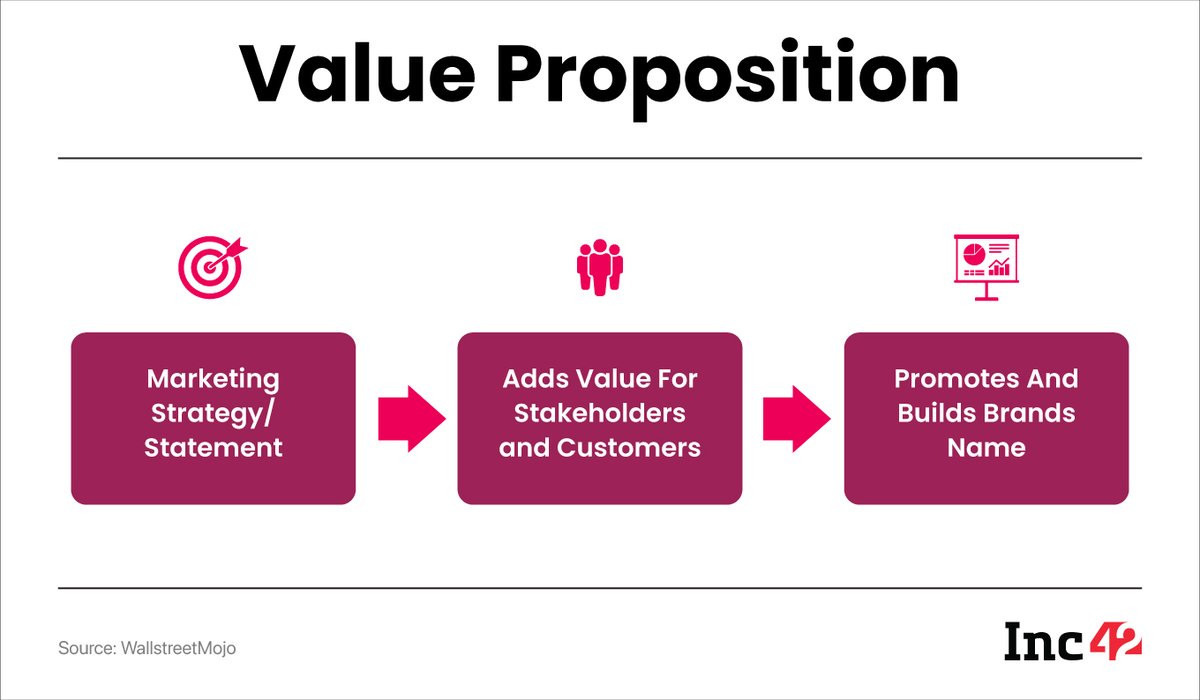
In today's crowded digital landscape, merely existing isn't enough. To truly capture attention and build an enduring relationship with your audience, you need more than just a product or service; you need a story, a promise, a reason to believe. This is where Value Proposition & Content Longevity intersect, forming the bedrock of lasting brand resonance. A clearly articulated value proposition isn't just a marketing slogan; it's the fundamental truth of what you offer, guiding every piece of content you create and ensuring it remains relevant, useful, and impactful for years to come.
At a Glance: Your Blueprint for Lasting Value
- Define Your Core: Understand that a value proposition is the economic and perceived value you offer, driving differentiation and positioning.
- Beyond the Buzzwords: Distinguish your value proposition from mission statements, slogans, and taglines.
- Customer-Centricity is Key: Identify customer problems, gains, and pains to build a proposition that truly resonates.
- Strategic Foundation: Your value proposition is a core business strategy, not just a marketing tactic.
- Craft with Precision: Follow a structured approach, from identifying problems to testing your message.
- Visualize Your Value: Utilize tools like the Value Proposition Canvas for clarity and alignment.
- Execution Matters: A strong value proposition is only as good as your ability to deliver on its promise.
- Fuel for Evergreen Content: A clear value proposition inspires content that remains valuable over time, fostering trust and loyalty.
What Exactly Is a Value Proposition? Unpacking the Core
Imagine walking into a bustling marketplace. Every vendor is clamoring for your attention, but only a few truly stand out. What makes them different? It's their unique promise, the inherent worth they offer that speaks directly to your needs. That, in essence, is a value proposition.
Coined in 1988 by McKinsey consultants Michael Lanning and Edward Michaels, a value proposition is the economic value a company or product delivers to its specific market segment of customers. It's the engine behind product differentiation and market positioning, an integral component of a company's overarching marketing strategy. Lanning and Michaels themselves defined it as "a clear, simple statement of the benefits, both tangible and intangible, that the company will provide, along with the approximate price it will charge each customer segment for those benefits."
Other perspectives echo this sentiment: Labeaux highlights it as the benefits a customer receives by purchasing from a vendor. Practically speaking, it's a market positioning statement that summarizes why a consumer should choose your product or service over another. While Hassan notes that no single, universally agreed-upon definition exists, the consistent thread is clear: it's about communicating unique worth. Importantly, a customer's perceived subjective value can differ from the company's constructed one, emphasizing the need for authentic delivery.
The Strategic Heartbeat: Purpose and Role in Business
A robust value proposition isn't a "nice-to-have"; it's a strategic imperative. Think of it as the gravitational pull that draws customers to your brand and keeps them there.
It is absolutely essential for gaining a competitive advantage and acts as a key conversion factor, transforming interested parties into loyal customers. As Kaplan and Norton famously stated, "strategy is based on a differentiated customer value proposition." This underscores its role as a foundational element of your overall business strategy, not just a surface-level marketing message. It’s the deep connection that links firm success directly to the value it provides its customers, a concept reinforced by Capon and Hulbert.
Furthermore, value propositions can be categorized broadly by two critical axes: product quality and price. Are you offering premium quality at a premium price, or exceptional value at an accessible price point? How you answer this helps define your market position and informs every strategic decision thereafter.
Decoding Your Differentiator: Core Elements of a Strong Value Proposition
So, what goes into building this powerful statement? It’s more than just a catchy phrase; it's a carefully constructed argument for why you matter.
- Target Audience: Whose specific problems are you solving? Without a clear understanding of your ideal customer, your proposition becomes a vague whisper in the wind.
- Product or Service (The Brand Promise): What exactly are you offering? This isn't just a list of features, but the underlying promise of what your offering does for the customer.
- Benefits and Features (Your Unique Edge): How do these offerings differ from competitors? What makes your solution uniquely effective or appealing? Focus on tangible benefits—how it saves time, reduces cost, improves life, or simplifies a process.
- Excellent Execution: Can you actually deliver on your promises, consistently and effectively? A brilliant value proposition crumbles if your execution is subpar. This considers everything from product quality to customer service and supply chain efficiency.
Value Proposition vs. The Usual Suspects: Clarifying the Marketing Mix
It’s easy to confuse a value proposition with other common brand statements. While related, each serves a distinct purpose. Understanding these differences ensures clarity in your communication and strategy.
- Value Proposition: This is about what you offer customers and why they should choose you. It's product- and service-oriented, focusing on the unique benefits and value exchange.
- Example: HubSpot: "Free CRM Software That Grows With Your Business."
- Mission Statement: This defines an organization's overarching objective or purpose. It's goal-oriented, explaining why the company exists.
- Example: HubSpot: "Helping millions of organizations grow better."
- Slogan: A short, catchy phrase designed for specific marketing campaigns, often temporary or adaptable. A brand can have multiple slogans over time.
- Example: De Beers: "A diamond is forever."
- Tagline: A concise statement that embodies a brand's essence or key attribute. It's typically one per brand and meant to be instantly recognizable and enduring.
- Example: Nike: "Just do it."
Crafting Your Value Story: A Step-by-Step Creation Guide
Building a compelling value proposition requires digging deep into your customer's world and understanding your place within it. It’s a methodical process that pays dividends.
1. Identify the Customer's Main Problem
This is your starting line. What challenge, frustration, or unfulfilled desire drives your target audience? Gather insights directly from customer service interactions, sales team feedback, and marketing data. Listen intently to their complaints and aspirations.
2. Understand Your Target Audience Deeply
Beyond problems, what are their issues, preferences, and overall context? Dive into social media conversations, comb through product reviews (yours and competitors'), and utilize consumer insight tools. Develop detailed buyer personas that bring your ideal customers to life. The more granular your understanding, the more precisely you can tailor your value.
3. Understand Your Competitors
Who else is trying to solve the same problem? Analyze their strengths, weaknesses, and—crucially—their stated value propositions. This knowledge allows you to pinpoint true differentiation and avoid becoming just another voice in the crowd. What gaps do they leave? What do they do well that you can learn from or build upon?
4. List the Benefits Your Product or Service Provides
Brainstorm every single way your offering helps customers. Then, for each feature, translate it into a tangible benefit. Instead of "Our software has a robust analytics dashboard," think: "Our software provides actionable insights that save you X hours a week on reporting, allowing you to focus on strategy." Focus on how each benefit directly addresses a single customer need or pain point identified in step 1.
5. Differentiate Yourself as the Preferred Provider
This is where you weave together steps 1-4. Align the problems your buyers face with the unique value your product or service delivers. Articulate precisely what makes your offering superior—be it speed, cost-effectiveness, ease of use, superior quality, or a unique emotional connection. This is your moment to shine a spotlight on your distinct competitive advantage.
6. Use a Template to Help Brainstorm and Refine
Don't aim for perfection on the first try. Start by combining grid-based information (who, what, why) with narrative storytelling to pressure-test different angles. Write many variations, then rigorously edit for succinctness and clarity. AI tools can be invaluable here for brainstorming diverse phrasing and identifying potential areas for improvement. The goal is a statement that is both comprehensive and concise.
Architecting Your Appeal: Proven Methods for Building Value Propositions
Beyond the general steps, several established frameworks can guide your value proposition development.
- Steve Blank Method: Simple, direct, and benefit-focused.
- "We help (X) do (Y) by doing (Z)"
- Example: "We help busy small business owners manage their social media by automating posting and engagement."
- Geoff Moore Method: Adds specific industry context.
- "For [target customer] who [needs or wants X], our [product/service] is [category of industry] that [benefits]."
- Example: "For enterprise IT managers who need to secure cloud infrastructure, our SaaS platform is a cybersecurity solution that provides real-time threat detection and automated remediation."
- Harvard Business School Method: Focuses on foundational questions.
- What is my brand offering?
- What job does the customer hire my brand to do?
- What companies and products compete?
- What sets my brand apart?
- Slow Storytelling Method: In a digitized world, this method emphasizes activating social, environmental, cultural, and economic values through evocative narratives. It involves:
- Narrating the organization's ethos.
- Redefining audience engagement.
- Articulating heritage and future vision.
- Mapping the customer journey with emotional touchpoints.
- Enhancing sustainability and ethical consumerism.
- Involving customers as advocates.
- Enriching the overall customer experience. This method is particularly powerful for fostering deep emotional connections and building content longevity by tapping into universal human values.
The Visual Blueprint: Mastering the Value Proposition Canvas
Developed by Alexander Osterwalder and Yves Pigneur, the Value Proposition Canvas is an incredibly powerful visual tool for ensuring your product or service is perfectly aligned with customer needs. It helps you systematically design, test, and build a value proposition that resonates.
The canvas has two main components:
1. Customer Profile (Right Side)
This section helps you understand your target customer in detail.
- Customer Jobs: What functional, social, or emotional tasks are your customers trying to get done? What problems are they trying to solve, or needs are they trying to satisfy?
- Example: A commuter's job might be "get to work on time," "feel productive during commute," "avoid traffic stress."
- Customer Gains: What positive outcomes or benefits do customers hope to achieve from solving their jobs? These are their expectations—desired results, benefits, or even unexpected delights.
- Example: Gains could be "arrive relaxed," "finish emails on the go," "save money on gas."
- Customer Pain Points: What negative emotions, undesired costs, risks, or bad experiences do customers encounter before, during, or after getting a job done?
- Example: Pains might include "being stuck in traffic," "high fuel costs," "feeling unproductive," "fear of accidents."
2. Value Map (Left Side)
This section describes how your products and services create value for the customer.
- Gain Creators: How do your products and services produce customer gains? How do they offer savings, convenience, new features, or positive social outcomes?
- Example: A ride-sharing app's gain creators could be "predictable arrival times," "carpooling options to save money," "hands-free travel for productivity."
- Pain Relievers: How do your products and services alleviate customer pain points? Do they save time, reduce costs, eliminate risks, or make life easier?
- Example: Pain relievers might include "bypass traffic with real-time routing," "competitive pricing," "comfortable seating," "professional drivers."
- Products & Services: These are the specific offerings that you put out into the market. It's not just the physical product, but also services, digital tools, and customer support.
- Example: The ride-sharing app itself, various service tiers (economy, premium, shared), customer support, in-app features.
The final, crucial step is to determine the "fit." This means identifying where your value map effectively addresses the most significant customer jobs, gains, and pains from the customer profile. Prioritize offerings that create significant gains and relieve substantial pains for your target segments.
From Concept to Customer: Deploying Your Value Proposition for Longevity
A beautifully crafted value proposition is meaningless if it's not effectively deployed and consistently monitored. This is where content longevity truly begins to shine.
1. Conduct Research and Competitor Analysis
Before anything else, dive deep. Use the Value Proposition Canvas to analyze your competitors' stated and implied value propositions. What are they good at? Where are their blind spots? This intelligence will help you carve out a truly unique space.
2. Explain the Value
Match your product's benefits directly to specific customer values. Don't just list features; articulate how those features translate into tangible value for their lives. For instance, instead of "Our device has a long battery life," explain, "Our device's extended battery life means you can work all day without hunting for an outlet, keeping your focus where it needs to be."
3. Describe Benefits with Illustrative Examples
Bring your value proposition to life. Don't just tell; show. Use compelling examples, videos, photos, or even live demonstrations that illustrate how customers experience the benefits. A mini-case snippet or a testimonial that speaks to the problem and solution is far more impactful than abstract claims.
4. Develop Unique Value Propositions for Each Buyer Persona
One size rarely fits all. If you have distinct customer segments, tailor your messaging to each unique buyer persona. While the core value proposition remains consistent, the language, benefits highlighted, and examples used should resonate specifically with that segment's motivations and pain points.
5. Test, Test, Test
Never assume. Validate your proposition with your target audience—both existing customers and non-customers. A/B test different versions across various marketing channels: your website, social media ads, video scripts, and even audio content. Gather feedback and watch for engagement patterns. This iterative process is crucial for optimization.
6. Deploy and Monitor at Scale for Consistent Impact
Once validated, integrate your refined value proposition across all customer touchpoints. This means your website, sales pitches, customer service scripts, product descriptions, and, critically, all your content. Ensure consistency in messaging. Continuously monitor its impact using unified data, looking for patterns in customer acquisition, retention, and sentiment. Be ready to make adjustments based on ongoing performance.
The Mark of Excellence: What Makes a Good Value Proposition?
A great value proposition isn't just persuasive; it's practically flawless in its construction and delivery.
- Clear Language: It addresses a primary customer need with one main, easy-to-understand idea. No jargon, no ambiguity. It should be immediately apparent what you offer and for whom.
- Specific Outcomes: It communicates tangible, measurable results customers can expect. Think "time saved," "money reduced," "workflow simplified," "performance boosted." This provides concrete reasons to choose you.
- Points of Differentiation: It clearly articulates what sets your company apart from competitors. What unique aspect of your product, service, or approach makes you the superior choice?
- Ability to Execute with Excellence: This is the non-negotiable component. The company must be able to perfectly deliver on its promise, taking into account all internal capabilities and external factors like regulations or market shifts. A promise unfulfilled erodes trust and negates any perceived value.
Beyond the Buzzwords: Common Questions Answered
We often encounter common questions when discussing value propositions. Let's clarify some frequent points.
- What is the primary purpose of a value proposition?
Its core purpose is threefold: to clearly communicate your unique value and benefits, to differentiate your brand from the competition, and ultimately, to attract and retain customers by offering compelling reasons to choose you. - What happens if a company fails to create or communicate a strong value proposition?
Failure here leads to significant difficulties in customer attraction and retention. Without a clear "why us," a company risks losing market share, struggling with customer engagement, and ultimately impacting its long-term success and sustainability. - Can a value proposition change over time?
Absolutely. A value proposition is not static. As customer needs evolve, market dynamics shift, and your offerings develop, your value proposition should be revisited and refined. This involves continually identifying and addressing new customer needs, modifying your offerings, and clearly communicating the updated value to your audience. This adaptability is key to content longevity.
Sustaining the Signal: The Link to Content Longevity
This brings us to the crucial relationship between a strong value proposition and content longevity. Your value proposition is the enduring North Star that guides every piece of content you create.
Think about it: content that is deeply rooted in your core value proposition will inherently solve consistent customer problems, address recurring pains, and deliver on enduring gains. This makes it evergreen. It's not chasing fleeting trends; it's delivering foundational value.
- How a strong VP informs enduring content: When you know exactly what unique value you provide, every blog post, video, podcast, or social media update can reinforce that message. This builds coherence and trust. Content focused on your value proposition naturally answers fundamental questions like "Why should I care?" or "How will this help me?" This type of content doesn't just attract immediate clicks; it fosters sustained engagement and positions your brand as a reliable resource.
- Creating evergreen content rooted in value: Instead of creating content that quickly becomes outdated, focus on topics that stem directly from your value proposition. If your value is "simplifying complex workflows," your content can explore productivity hacks, software tutorials, or industry best practices—all designed to make life easier for your audience, enduringly. This content continues to provide value weeks, months, or even years after publication.
- Examples of VP-driven content that resonates: Consider a company whose value proposition is "eco-friendly, durable outdoor gear." Their content isn't just product promotions; it's guides on sustainable hiking, interviews with conservationists, tips for gear repair, or deep dives into ethical manufacturing. This type of content builds a community around shared values and interests, ensuring its relevance far beyond a single sales cycle. This "slow storytelling" approach, activating social and environmental values, is a powerful driver of long-term content impact.
A clear value proposition is a significant catalyst for customer-focused innovation, as seen in Amazon's diversification (Lindic and Marques). It grounds your creative efforts, ensuring that every piece of content, whether a technical whitepaper or an engaging infographic, reinforces your fundamental promise to the customer. When content consistently delivers on perceived value—a customer's overall assessment of utility based on what is received and given (Zeithaml)—it naturally achieves longevity.
Your Next Move: Activating Lasting Resonance
Your brand's ability to resonate long-term hinges on the clarity and strength of its value proposition. It’s not a one-time exercise but an ongoing commitment to understanding your customer, articulating your unique worth, and consistently delivering on your promises.
Take the time to truly immerse yourself in the journey of crafting, validating, and deploying your value proposition. Use the tools and methods outlined here to move beyond generic statements and create a powerful, enduring narrative. Then, let that narrative be the unwavering blueprint for all your content. When your content consistently reflects your distinct value, you're not just publishing; you're building trust, fostering loyalty, and ensuring your brand's voice remains clear and compelling for years to come.